How to Get Around Sri Lanka: Complete Transport Guide for Tourists
Not sure whether to use trains, buses, tuk-tuks, taxis or a private driver in Sri Lanka? This guide explains where each option works best, what to book ahead and how to mix transport without making your trip harder.
Written by Ashan Lokuge
Last updated on Published on

Sri Lanka looks small on a map. That can be a little misleading, and it is why getting around Sri Lanka takes more planning than most first-time visitors expect.
A journey that looks short by distance can still take a few hours, especially in the hill country, around busy towns or when you need to change from one type of transport to another. The good part is that Sri Lanka gives you plenty of ways to move around. Trains, buses, tuk-tuks, taxis, ride-hailing apps, private drivers and rental cars all have a place.
For most visitors, the easiest trip is not built around one transport method. It is usually a mix.
You might take a private car from the airport to Sigiriya, use a train through the hill country, grab tuk-tuks around Ella, then book another transfer towards Yala or the south coast. That is completely normal here.
If comfort matters more than doing every connection yourself, you can also compare private driver options in Sri Lanka before deciding which parts of the trip you want to handle independently.
This guide will help you work out what makes sense for your route, budget and travel style.
What Is the Best Way to Get Around Sri Lanka?
For most tourists, the best way to get around Sri Lanka is to combine trains, private transfers or taxis, and short tuk-tuk rides.
Trains are great when the railway actually matches your route, especially through parts of the hill country and along the coast. Buses are usually the cheapest choice and reach far more places, but they can be tiring with big luggage. Tuk-tuks are useful for short local journeys. A private driver is easier when you have several stops, children, heavy bags or places that are awkward to reach by rail.
Self-driving gives you freedom, but it also means dealing with unfamiliar roads, local driving habits and the paperwork needed to drive legally.
So there is no single "best" transport for every traveller. The route matters more than the transport name.
Sri Lanka Transport Options at a Glance
| Transport | Typical cost level | Comfort | Speed | Best for |
|---|---|---|---|---|
| Train | Low | Medium | Slow to medium | Scenic journeys and major rail routes |
| Bus | Very low | Basic | Varies | Budget travel and wide route coverage |
| Tuk-tuk | Low | Basic | Best for short trips | Local travel and short sightseeing trips |
| PickMe | Low to medium | Good | Convenient where drivers are available | Towns, cities and short to medium rides |
| Uber | Low to medium | Good | Convenient in supported areas | Colombo, Negombo and selected areas |
| Taxi | Medium | Good | Flexible | Airport trips and point-to-point travel |
| Private driver | Higher | High | Flexible | Families, couples, groups and multi-stop trips |
| Self-drive car | Medium to high | Depends on vehicle | Flexible | Confident independent travellers |
| Self-drive tuk-tuk | Medium | Basic | Slow | Adventure-focused trips |
| Domestic or charter flight | High | High | Fast in the air | Selected long-distance trips |
Cost is relative here. A bus can be incredibly cheap, while a private car costs much more, but the private car may also save hotel-to-station transfers, luggage hassle and several hours of waiting.
That is why price alone does not always tell you which option is better.
Sri Lanka Is Small, But Travel Can Take Longer Than You Think
This is one of the first things to understand when planning a Sri Lanka itinerary.
The island is not huge, but road speed is very different from driving on a wide motorway for the whole journey. Roads pass through towns and villages. Hill-country roads curve through mountains. City traffic can build up quickly. Buses stop often. Trains follow fixed routes and timetables rather than the exact path to your hotel.
The official Sri Lanka Tourism getting-around guide also warns that travelling around the island can be time-consuming despite the country's size.
A simple example is the hill country. A place may be only 60 or 70 kilometres away, but that does not mean you should plan it as a quick one-hour drive.
Another common mistake is assuming every famous destination has a railway station.
Sigiriya does not. Yala National Park does not. Nuwara Eliya town does not either, with Nanu Oya being the usual rail gateway. So even if you love trains, you will still need road transport for parts of many trips.
Try to plan by real travel time and connections, not distance alone.
Travelling Around Sri Lanka by Train
Train travel is one of the nicest parts of a Sri Lanka trip when the route fits.
It is affordable, you can avoid some road traffic, and several lines pass through beautiful scenery. The hill-country railway gets most of the attention, but trains also connect Colombo with places on the south coast and many major towns in other parts of the country.
The important thing is not to treat the train as a sightseeing attraction that must be used everywhere.
Sometimes it is perfect. Sometimes a car or bus is simply easier.
Where Trains Work Well for Tourists
Train travel can make good sense for journeys involving places such as:
- Colombo
- Kandy
- Nanu Oya
- Ella
- Badulla
- Galle
- Matara
- Jaffna
- Anuradhapura
- Trincomalee and Batticaloa on relevant services
You still need to check the exact service on your travel date. Sri Lanka Railways can change schedules, and restoration work or temporary disruptions sometimes affect sections of the network.
Reserved and Unreserved Train Travel
Sri Lankan trains can have both reserved and unreserved seating, depending on the train and carriage.
Reserved seats are useful when you want a known seat on a popular journey. Unreserved travel can be cheaper and more flexible, but crowded services are not much fun when you are carrying a large suitcase.
Sri Lanka Railways currently allows online reserved-seat bookings through its official seat reservation service. The current booking FAQ says reservations can be made up to 30 days before travel and a maximum of five seats can be reserved at once.
Those rules can change, so check again when your travel date gets closer.
Train Classes Are Not All the Same
You may see first class, second class, third class and special reserved carriage options depending on the service.
Do not assume first class is automatically the best travel experience. For some travellers, a reserved second-class seat is a better balance of comfort and atmosphere. On other routes, first class can make sense if you want air conditioning or a quieter journey.
We will cover the differences properly in our dedicated Sri Lanka train classes guide rather than making this page too heavy.
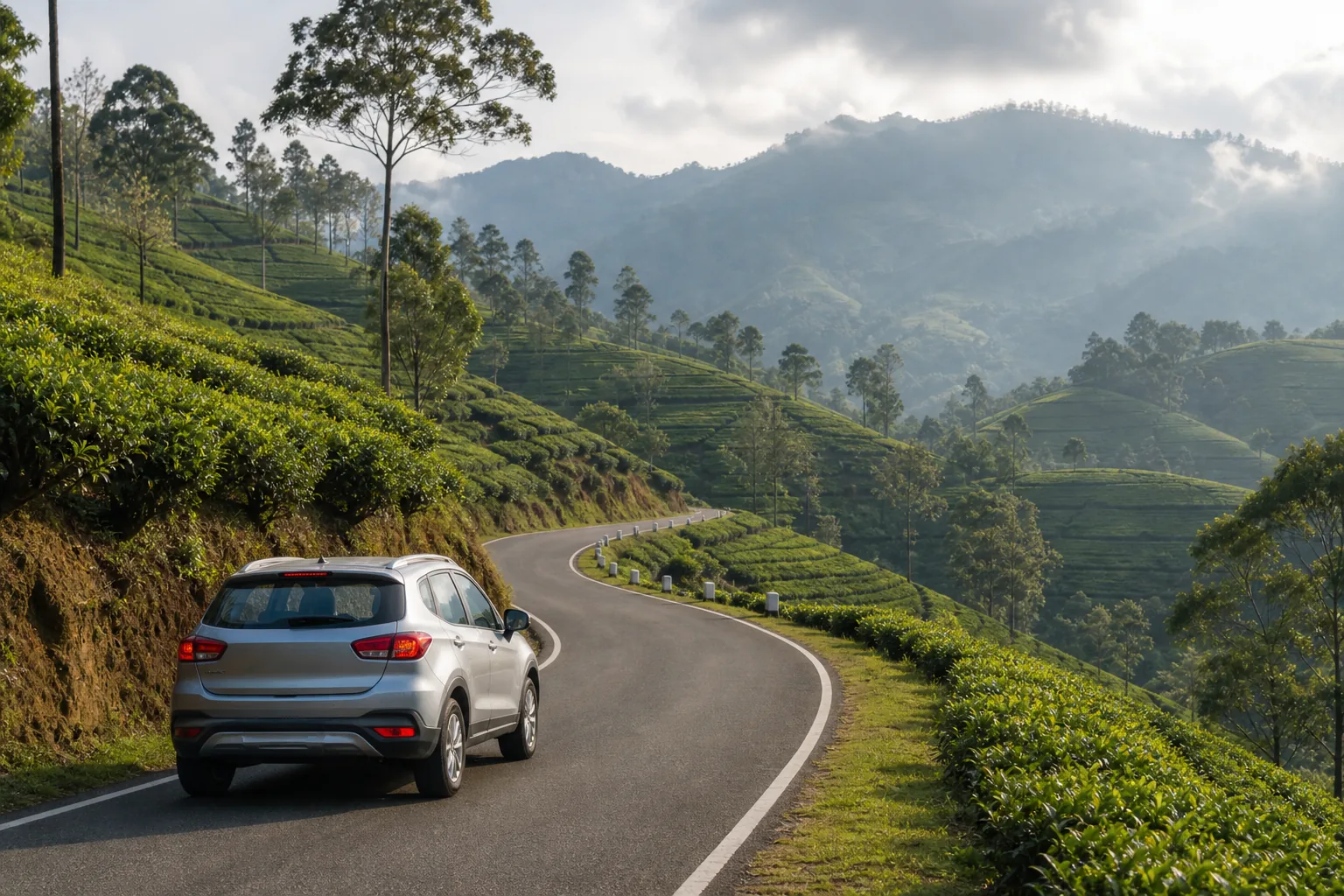
A Current Railway Note
Railway update, checked 20 August 2026: Sri Lanka Railways reports that train services from Badulla to Nanu Oya have resumed after restoration work on the Ambewela to Nanu Oya section damaged by Cyclone Ditwa. Railway conditions can change, so check the official schedule before a journey that matters for a hotel check-in, safari or flight connection.
This is one reason we do not recommend planning an important connection with almost no buffer.
Travelling Around Sri Lanka by Bus
If your main goal is to keep transport costs low, buses are hard to beat.
Sri Lanka has a very wide bus network. Government and private buses connect cities, towns and smaller places that do not have railway stations. In many areas, the bus is the only realistic public transport choice.
But cheap does not always mean easy.
A first-time visitor may need to work out which stand the bus leaves from, where to change, and how much space there will be for luggage. A backpack is much easier than a 25 kg suitcase when the bus is busy.
Who Will Probably Like Bus Travel?
Buses can work very well for:
- solo travellers
- backpackers
- budget travellers
- people travelling with small bags
- flexible itineraries
- shorter regional journeys
They are less attractive when you have young children, several suitcases, expensive equipment or a tight check-in time.
If you are not sure where to board, ask at the bus station or your accommodation. People do this every day, and a quick local question is often more useful than relying on an old timetable found online.
Long-Distance and Local Buses
Sri Lanka has both local services and longer-distance buses.
Some longer routes may have more comfortable or air-conditioned vehicles, while other buses are basic. The experience can change a lot by route, time of day and operator.
This is why we will build a separate bus guide with practical route examples instead of pretending every bus journey works the same way.
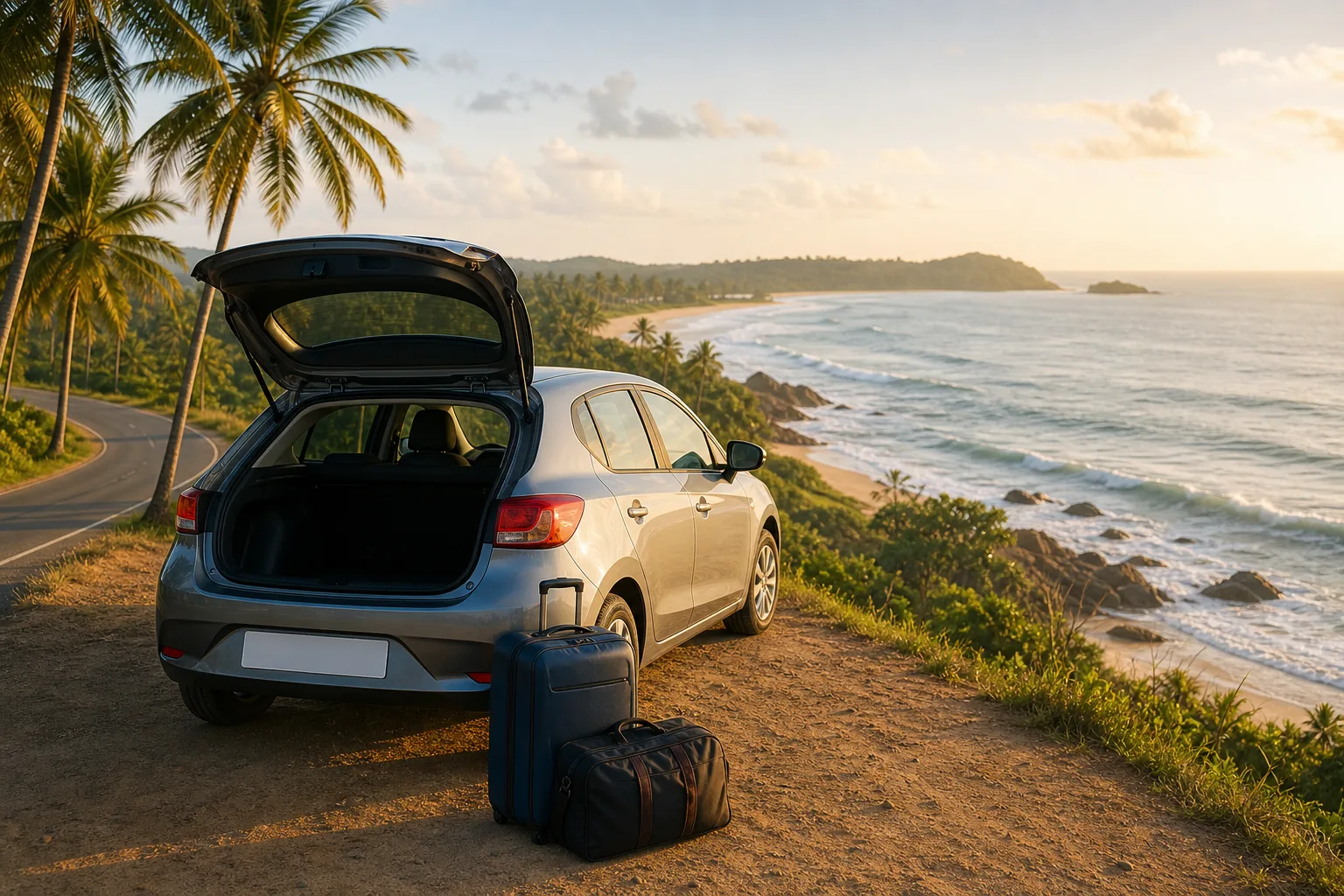
Tuk-Tuks, Taxis and Ride-Hailing Apps in Sri Lanka
Short hops around towns, beaches and railway stations are usually easier by tuk-tuk, taxi or a ride-hailing app than by any long-distance option. Here is how each one works in practice.
Getting Around Sri Lanka by Tuk-Tuk
You probably will use a tuk-tuk at least once in Sri Lanka.
They are everywhere in towns and tourist areas, and they are very useful for short journeys. Station to hotel, hotel to beach, beach to restaurant, or a quick trip to a nearby attraction are exactly the sort of journeys where a tuk-tuk makes sense.
They are also part of the Sri Lankan travel experience, but you do not need to turn every journey into one.
How Far Should You Travel by Tuk-Tuk?
There is no fixed rule, but tuk-tuks are at their best for short local trips.
A long journey can become tiring because there is less protection from heat, rain, dust and road noise. Luggage space is also limited.
For a couple with small backpacks, a slightly longer tuk-tuk ride may be fine. For a family with two large suitcases, it gets inconvenient quickly.
If you take a street tuk-tuk and the fare is not metered or app-based, agree on the price before leaving. That avoids an awkward conversation at the end.
Using PickMe in Sri Lanka
PickMe is Sri Lanka's best-known local ride-hailing platform.
The app offers tuk-tuks, cars and larger vehicles, and its official website says ride-hailing coverage extends across the island. In real life, driver availability still depends on where you are and what time you request the ride.
That distinction matters.
You may open the app in a major town and get several nearby options. In a quieter rural area, there may be few or no drivers close enough to accept.
The official PickMe website lets users enter pickup and drop-off points, see an estimated fare, track the driver and use features such as location sharing.
For tourists, that price estimate and map-based destination entry can be especially useful because you do not have to explain every road name.
PickMe or a Street Tuk-Tuk?
Neither is always better.
PickMe is useful when you want a fare estimate, a recorded trip and an exact destination in the app. Street tuk-tuks can be easier when there are no app drivers nearby or when one is already waiting outside your hotel.
Use whichever makes sense at that moment.
Does Uber Work in Sri Lanka?
Yes, but do not assume Uber has the same coverage across Sri Lanka that you may be used to in a large European or Asian city.
As of August 2026, Uber's official Sri Lanka cities page lists Colombo, Negombo and Beruwala. You can check the current supported areas on Uber's Sri Lanka cities page.
Even inside a supported area, actual vehicle availability can change by location and time.
For that reason, we would not build a whole Sri Lanka itinerary around the idea that Uber will always be waiting in every destination.
In Colombo and around the airport region, ride-hailing is much more useful. In remote areas, keep another plan.
Using Taxis in Sri Lanka
Taxis are straightforward when you want door-to-door transport without keeping a driver for several days.
You can book through hotels, local taxi operators, airport counters, tour companies or ride-hailing apps.
At Bandaranaike International Airport, Airport and Aviation Services operates an official supervised taxi service with counters in the arrival area. This can be useful if you land without a pre-arranged transfer.
For longer journeys, ask what the quoted price includes.
Things such as expressway tolls, waiting time, extra stops and late changes can affect the final amount. A clear price before the trip saves confusion later.
Hiring a Private Driver in Sri Lanka
A private driver costs more than public transport, but it solves a lot of little travel problems at once.
You do not need to get yourself to a station. Your luggage stays in the vehicle. You can stop for food or viewpoints. And you can travel directly between hotels even when the two destinations do not have a simple public transport connection.
This is particularly useful around the Cultural Triangle, hill-country road routes, safari areas and trips with several stops.
Do You Need a Driver for Your Whole Holiday?
No.
This is something first-time visitors sometimes misunderstand.
You can hire a driver only for the parts where a car is genuinely useful.
For example:
- Airport to Sigiriya by private car.
- Sigiriya to Kandy by car.
- Train through part of the hill country.
- Private transfer from Ella towards Yala.
- Tuk-tuks around the south coast.
- Train or car back towards Colombo.
That mix gives you the comfort of a driver without paying for a car to sit unused while you enjoy a train journey or spend three days at the beach.
If you are deciding whether keeping one driver is worth it, our self-drive vs car with driver comparison goes deeper into the trade-offs.
Can Tourists Drive Themselves Around Sri Lanka?
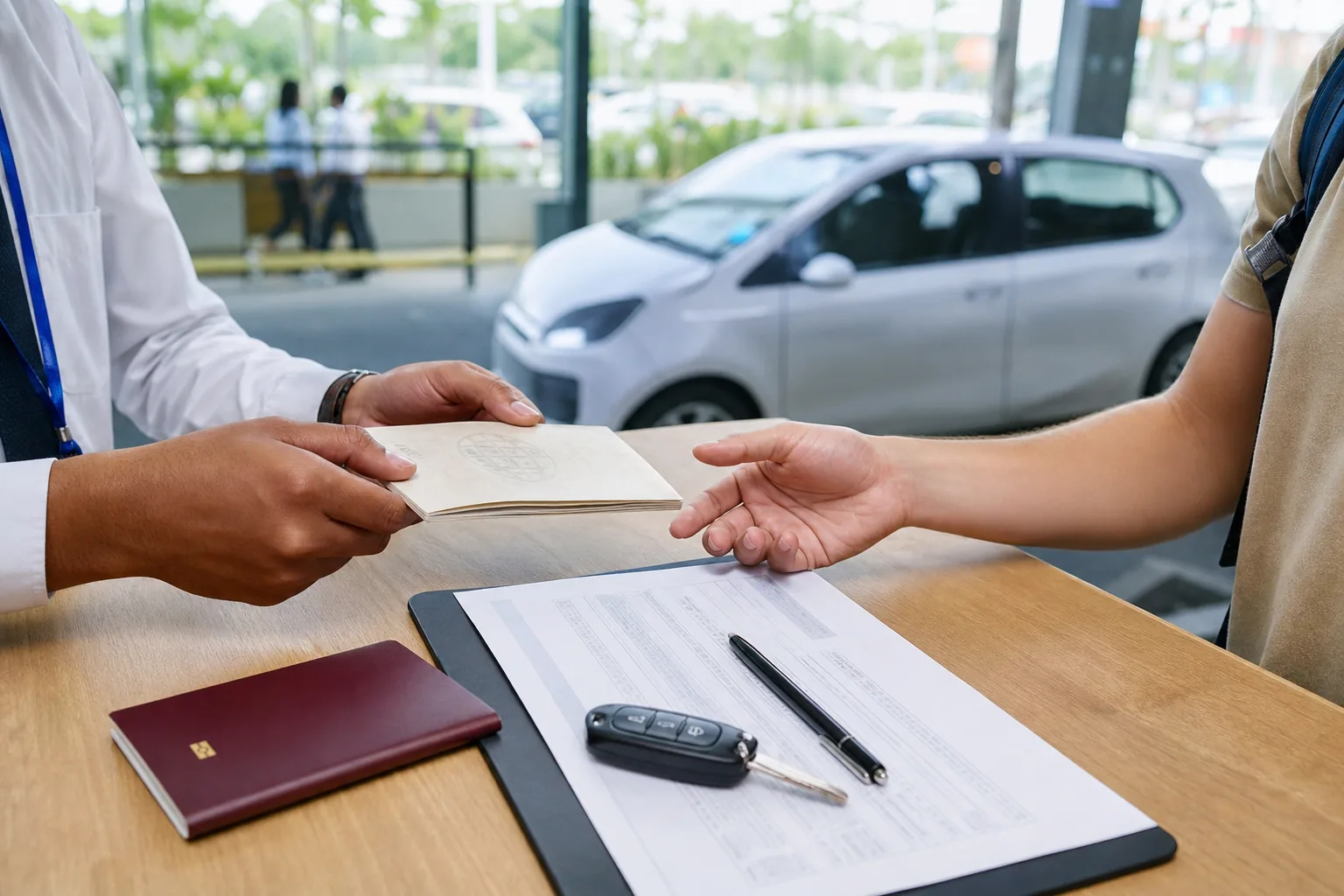
Yes, foreign visitors can drive in Sri Lanka when they hold the correct legal authority for the vehicle they are using.
The paperwork is the important part.
Sri Lankan law recognises qualifying International Driving Permits in certain circumstances, and the Department of Motor Traffic also issues temporary driving licences to foreign visitors. The exact route that applies to you depends on your licence, permit and vehicle class, so verify current requirements with the Sri Lanka Department of Motor Traffic before you collect a rental vehicle.
Once the paperwork is sorted, you still need to decide whether you actually want to drive here.
Sri Lanka drives on the left. Traffic can feel unpredictable if you are new to the country. Buses, motorbikes, pedestrians, tuk-tuks and animals can all appear on the same road. Hill-country roads need patience.
Plenty of confident travellers enjoy the freedom, though.
You can stop where you like, change plans easily and avoid arranging a new transfer every few days.
Our self-drive car rental guide explains the practical side in much more detail. When you are ready to compare vehicles, you can also browse self-drive car rental providers listed on Wonder of Ceylon.
Who Is Self-Drive Best For?
It can make sense if:
- you are confident driving on the left
- you have experience with busy or unfamiliar roads
- you want to explore smaller places
- you are staying longer
- you prefer privacy
- you do not mind handling parking and navigation yourself
A first visit to Sri Lanka does not automatically mean you should avoid self-drive. But if the idea already sounds stressful before you arrive, a private driver will probably make the holiday more enjoyable.
What About Renting a Tuk-Tuk and Driving It Yourself?
Self-drive tuk-tuks have become an adventure choice for some travellers.
It can be fun, and it certainly gives you a different view of the country. But a tuk-tuk is slower than a car, carries less luggage and leaves you more exposed to heat and rain.
You also should not assume that the permission you have to drive a car automatically covers a three-wheeler. Vehicle classes and licensing matter. Check the current legal requirements with the Department of Motor Traffic and your rental company before paying.
For a short holiday with lots of ground to cover, a self-drive tuk-tuk may eat up more time than you expect.
For a slow trip where the journey itself is the point, that may be exactly why you like it.
Can You Fly Between Destinations in Sri Lanka?
Domestic and charter air travel exists, but it is not the normal way most tourists move around Sri Lanka.
Routes and schedules are much more limited than road transport, and services can change. Flying may make sense for a traveller with a higher budget who needs to cut down a long overland journey, but it is usually not the first option we would plan around.
If you are considering a domestic flight, check the operating airline directly for current routes, baggage limits, check-in times and weather-related changes.
For most itineraries, road and rail will still do most of the work.
Best Transport by Area in Sri Lanka
Different parts of Sri Lanka favour different transport choices. This is one of the reasons a mixed approach works so well.
Colombo and the Airport Area
Around Colombo, Negombo and the airport region, you have the widest choice.
Ride-hailing apps, taxis, tuk-tuks, buses and trains can all be useful depending on the trip. A car is convenient for airport transfers, while tuk-tuks and apps are easier for short city journeys.
You probably do not need a rental car just to explore central Colombo.
The South Coast
For places such as Galle, Unawatuna, Ahangama, Weligama and Mirissa, trains can be useful along the coast, while tuk-tuks are excellent for short hops between beaches, cafés and hotels.
A taxi or private car becomes more useful when your hotel is away from the railway, you have a lot of luggage, or you are travelling further east where rail becomes less useful for your route.
If you are still choosing which area fits your trip, it can help to browse Sri Lanka destinations before locking in transport.
Kandy and the Hill Country
This is where travellers often want to use the train, and for good reason.
But the train does not solve every hill-country journey.
Nuwara Eliya is reached by road from Nanu Oya station. Hotels around Ella can also be some distance from the station. Tea estates, waterfalls and viewpoints may require tuk-tuks or cars.
If you want to enjoy a famous scenic train journey, use it. Just do not force the train into every day of the hill-country section.
Sigiriya and the Cultural Triangle
Road transport is often more practical around Sigiriya, Dambulla, Polonnaruwa and nearby attractions because the places you want to visit are spread out.
Buses can keep costs low, especially if you have time.
A car with a driver is easier if you want to visit several sites in one day, start early, or avoid spending part of the day working out changes.
Yala and Safari Areas
Safari areas are another place where road transport becomes important.
You need to get to your accommodation or safari meeting point, and that may not line up neatly with a train route. Private transfers are common for legs such as Ella to the Yala or Tissamaharama area.
If you have an early morning safari, staying near the safari area the night before is usually much less stressful than attempting a long transfer before sunrise.
East Coast
Places such as Trincomalee, Pasikuda and Arugam Bay need more route-specific planning.
Some areas have rail access, others rely much more on buses and road transfers. The best choice also depends on where you are arriving from.
Do not assume that because two places are on the same side of the island they will have a simple direct connection.
Jaffna and the North
Jaffna is one of the destinations where train travel can be very useful when services match your dates.
Road travel is also possible, of course. For travellers heading deeper into the north or visiting several smaller places, you may still need local buses, tuk-tuks or a car after reaching Jaffna.
Which Sri Lanka Transport Option Is Best for You?
There is no perfect answer, but these are sensible starting points.
Solo Backpacker
A mix of trains, buses and tuk-tuks will usually give you the best value.
You can spend more on a taxi or transfer only where the public route is awkward.
Couple
For many couples, the sweet spot is scenic trains plus private transfers on difficult legs, with PickMe, Uber or tuk-tuks for short journeys where available.
You get the fun bits of public transport without carrying luggage through every connection.
Family With Children
A private car or driver often becomes much more attractive when you have children.
You can stop when needed, keep bags together and avoid waiting at crowded stations. You can still add one or two train journeys for the experience.
If you need a child seat, arrange it before the travel day. Do not assume every taxi or transfer vehicle has one ready.
Group of Friends
A van or larger private vehicle may be better value than it first looks once the fare is divided between several people.
Compare the total cost per person, not just the headline vehicle price.
Luxury Traveller
A private driver gives the easiest door-to-door experience.
You can still take a scenic train on the section you actually want to experience, then have another transfer arranged at the destination.
Traveller With Large Luggage
Large suitcases change everything a bit.
A private car, taxi or driver will normally be easiest. Trains can still work, especially with reserved seats and sensible packing, but crowded buses and tuk-tuks become less appealing.
How Much Does Transport Cost in Sri Lanka?
Sri Lanka can be very cheap to travel around if you use buses and trains.
Private transport costs more, but there is a huge range between a short tuk-tuk ride and a private van for a full day.
Instead of giving you a big list of prices that will become outdated, think about the things that change the cost:
- distance
- transport type
- vehicle size
- reserved or unreserved train travel
- waiting time
- extra stops
- expressway tolls
- pickup location
- whether it is one-way or return
- time of day
- how far the driver needs to travel to reach you
Apps are useful because they can give you a current estimate for a specific ride.
For long private transfers, get the full quote before confirming and ask whether tolls and waiting are included. If you are building a full holiday budget, the Sri Lanka trip cost calculator can help you compare transport with accommodation, food and activity costs.
Should You Book Transport Before Arriving in Sri Lanka?
Some transport is worth arranging early. Some is easier to sort out after you arrive.
Usually Worth Booking Ahead
Consider booking in advance for:
- popular reserved train journeys
- airport pickup after a late arrival
- a multi-day private driver
- fixed transfers connected to safaris or tours
- larger family or group vehicles
- child seats
- peak travel periods
Reserved train seats are the big one. If a famous route is important to your itinerary, do not wait until the last minute and assume there will be a reserved seat.
Usually Easy to Arrange Locally
You can often arrange these as you go:
- short tuk-tuk rides
- many local bus journeys
- city taxis
- ride-hailing app trips
- short hotel-to-station transfers
There is no reason to pre-book every ten-minute tuk-tuk ride before your plane even leaves home.
Practical Tips for Getting Around Sri Lanka
A few practical details decide how smooth the travelling days feel, particularly with heavy bags, young children or a first trip on public transport.
Travelling Around Sri Lanka With Luggage
Transport feels very different with a small backpack compared with two big hard-shell suitcases.
If you are travelling by bus a lot, pack as light as you reasonably can.
On trains, keep valuables with you. Space for larger bags varies by carriage and how crowded the service is. Do not expect an airport-style luggage system.
Tuk-tuks can take luggage, but the space is limited. A couple with one or two bags is usually fine. Four people with large suitcases will need something bigger.
If you are changing hotels every night, luggage can become more annoying than the travel itself. Slowing the itinerary down by one or two stops often improves the whole trip.
Getting Around Sri Lanka With Children
Sri Lanka can be a great family trip, but young children make transport planning more important.
Long bus journeys and multiple changes may save money but use up a lot of energy. A private car gives you freedom to stop for food, toilets or a tired child.
Air conditioning also matters on hot routes.
For longer journeys, try not to stack a five-hour transfer and a major sightseeing activity into the same day unless you really need to.
A slightly slower itinerary normally works better for families.
Is Public Transport in Sri Lanka Safe for Tourists?
Many tourists use Sri Lankan trains and buses every day, but normal travel precautions still matter.
Keep your passport, phone and money with you rather than in an unattended bag. Be more careful with valuables when a station or bus is crowded. At night, know how you are getting from the station or stop to your hotel before you arrive.
Road travel deserves attention too. If a driver is going faster than you are comfortable with, it is okay to ask them to slow down.
For trains, check service information when weather or railway disruptions have been reported.
You do not need to be nervous about every journey. Just do the same sensible things you would do in another unfamiliar country.
Transport Mistakes First-Time Visitors Should Avoid
1. Planning by Distance Only
Fifty kilometres in Sri Lanka does not always feel like fifty kilometres at home.
Check realistic travel time.
2. Trying to Visit Too Many Places
If half your holiday is spent checking out of hotels and travelling to the next one, the itinerary is probably too busy.
3. Assuming Trains Go Everywhere
They do not.
Some of Sri Lanka's biggest tourist destinations need a road connection.
4. Leaving an Important Train Reservation Too Late
If a specific scenic train is one of the main things you want to do, plan it early.
5. Using Tuk-Tuks for Every Long Trip
It sounds adventurous until you are three hours into a hot, noisy ride with luggage beside you.
6. Hiring a Driver for Days You Do Not Need One
A driver is useful, but you do not have to keep the same car through every train day or beach stay.
7. Carrying Too Much
Heavy luggage makes buses, station changes and tuk-tuks harder than they need to be.
8. Planning Important Connections Too Tightly
Leave some buffer before flights, safaris and fixed tours.
9. Not Checking Current Railway Information
Schedules and service conditions can change.
10. Choosing Only by Price
The cheapest option is not always the best value when it adds three changes and half a day of travel.
Example Ways to Mix Transport in Sri Lanka
You do not need to copy these exactly. They just show how transport can fit the traveller rather than the other way around.
Budget Trip
Bus + train + tuk-tuk.
Spend very little on the easy legs, then use a taxi only when a connection becomes awkward.
Comfortable Couple's Trip
Private airport transfer + scenic train + selected private transfers + tuk-tuks and ride-hailing locally.
This is probably one of the easiest balances for a first visit.
Family Trip
Private driver for most long-distance journeys + one planned train experience + local taxis or tuk-tuks where practical.
It costs more, but moving bags and children becomes much easier.
Slow Adventure Trip
Trains + buses + self-drive tuk-tuk or car for selected sections.
This works best when the timetable is flexible and travelling itself is part of the fun.
Popular Sri Lanka Routes and Transport Options
These are not the only ways to travel. Think of them as starting points.
| Route | Options worth considering |
|---|---|
| Colombo to Kandy | Train, bus, private car |
| Colombo to Galle | Train, bus, private car |
| Colombo Airport to Sigiriya | Private transfer, taxi, bus combinations |
| Sigiriya to Kandy | Private car, bus |
| Kandy to Nuwara Eliya | Train to Nanu Oya plus road transfer, bus, private car |
| Nuwara Eliya to Ella | Train from Nanu Oya, bus, private car |
| Ella to Yala area | Private transfer, bus |
| Ella to Mirissa | Private car, bus combinations |
| Galle to Colombo | Train, bus, private car |
| Colombo Airport to Negombo | Taxi, PickMe, Uber where available |
We will create separate route guides for these because each journey has its own little details. Where you change, where the station actually is, whether luggage is annoying, and what time you should leave all matter more than a generic "take the bus" answer.
So, What Would We Choose?
For a first trip to Sri Lanka, we would not choose one transport method and use it for the whole holiday.
We would mix them.
Use a private transfer when the public connection is messy. Take the train when the journey itself is worth experiencing. Use tuk-tuks for short local trips. Use PickMe or Uber where the app has good availability. Take buses when your budget matters more than comfort.
And self-drive only if you actually want to drive, not because you feel you need a rental car to see Sri Lanka.
If driving is still on your list, check the documents tourists need to drive in Sri Lanka before you book. The rules are much easier to deal with when you know what paperwork applies before arriving at the rental desk.
The best transport plan is usually the one that lets you spend more time enjoying Sri Lanka and less time moving between places.
FAQs About Getting Around Sri Lanka
Is it easy to get around Sri Lanka without a car?
Yes. You can travel around Sri Lanka without renting a car by combining trains, buses, tuk-tuks, taxis and ride-hailing apps. Some destinations are easier than others, so private transfers can still be useful for individual legs.
What is the cheapest way to travel around Sri Lanka?
Buses are usually the cheapest option, with trains also offering very affordable travel on routes served by the railway. The best low-cost trip often combines buses, trains and short tuk-tuk rides.
What is the fastest way to travel around Sri Lanka?
For many point-to-point journeys, a private car or taxi is the fastest practical choice because it takes you directly from one place to another. Domestic air travel can be faster for selected routes, but availability is limited and it is not useful for most itineraries.
Are trains in Sri Lanka good for tourists?
Yes, especially when the railway matches your route. Trains are affordable and some journeys are very scenic. Reserved seats are worth considering on popular routes. Always check the current schedule before travel.
Are buses in Sri Lanka easy for tourists to use?
They can be, especially if you travel light and have a flexible schedule. The main challenge for first-time visitors is usually identifying the right bus or change rather than buying a ticket. Asking at the station or your accommodation helps.
Is it worth hiring a private driver in Sri Lanka?
For many couples, families and groups, yes. A private driver can save time and make luggage, hotel transfers and multi-stop days much easier. You do not need to hire one for the entire holiday.
Does PickMe work across Sri Lanka?
PickMe says its ride-hailing service covers the island, but driver availability is not equal everywhere. It is much easier to find a ride in busy towns and cities than in some remote areas.
Are tuk-tuks good for long journeys?
They can do long journeys, but that does not mean they are always comfortable. For most travellers, tuk-tuks make more sense for shorter local trips. A car, train or bus is usually easier for long intercity travel.
How far in advance can I book Sri Lanka train tickets?
Sri Lanka Railways currently says online reserved seats can be booked up to 30 days before the travel date. This can change, so confirm on the official reservation site when you are ready to book.
Getting Around Sri Lanka Does Not Need to Be Complicated
You do not need to solve every transport detail months before arriving.
Start with the big journeys. Decide where a train adds something special, where a bus saves money, and where a private car makes the day much easier. Then leave the small local rides until you are actually there.
Sri Lanka works well when you stay flexible.
A train through the hills, a tuk-tuk to dinner, a private car to the next region and a bus on an easy route can all belong in the same trip. That mix is not messy. In many cases, it is the most sensible way to travel around the island.
Related Articles
Driving in Sri Lanka as a Tourist: The 2026 Self-Drive Guide
Can tourists drive in Sri Lanka? Yes, with the right permit. The IDP recognition rule most visitors miss, road rules, how safe it is, the best routes, and when a private driver makes more sense.
Read MoreWhat Documents Do Tourists Need to Rent and Drive a Car in Sri Lanka?
Every document tourists need to rent a car and drive legally in Sri Lanka in 2026, including airport permits, IDPs, DMT requirements, fees and rental paperwork.
Read MoreSelf-Drive vs Car with Driver in Sri Lanka: How to Choose (2026)
Self-drive or hire a car with a driver in Sri Lanka? An honest, traveller-by-traveller breakdown of cost, stress and the regions that suit each, so you can decide before you book.
Read MoreWritten by
Ashan LokugeTravel writer
Ashan Lokuge is a content writer, SEO specialist and software engineer at Wonder of Ceylon. He travels all nine provinces of Sri Lanka to research every guide in person, focusing on the places most travel guides miss.
View all posts by Ashan